Autonomous 6-DOF Robotic Arm for EV Charging
A self-designed 6-DOF robotic arm for autonomous EV charging that detects a vehicle's charging port across several connector standards. I designed the full arm in SolidWorks, sized every joint through torque and FEA analysis, and trained the YOLOv8 model that detects the port across seven connector types. The project produced a Q1 journal paper and a filed patent.
Role: Mechanical Design, FEA Lead & Perception
Organization: SRM Institute of Science & Technology
Timeline: Sep 2023 – Aug 2024
· SolidWorks · CAD · ANSYS · Structural & Modal FEA · YOLOv8
What I Built
Designed the full 6-DOF manipulator in SolidWorks: link geometry, joint layout, and a 750 mm horizontal by 1350 mm vertical reach envelope.
Sized each joint's motor with a dynamic torque analysis across payloads up to 2.6 kg, finding a peak of about 45 N·m at the base joint.
Ran structural and modal FEA in ANSYS comparing structural steel against aluminum, using per-link deformation and stress to drive the material choice.
Trained a YOLOv8 model to detect EV charging ports across seven connector standards.
Results
The detection model reached 0.993 mAP50 on Type-1 ports and 0.940 mAP50 across all seven classes, with 100% recall on Type-1, CCS1, and Tesla ports.
The torque and FEA study set the motor and material choices for every joint, with a peak load near 45 N·m at the base.
Published in Results in Engineering (Elsevier, Q1) and filed as an Indian patent.
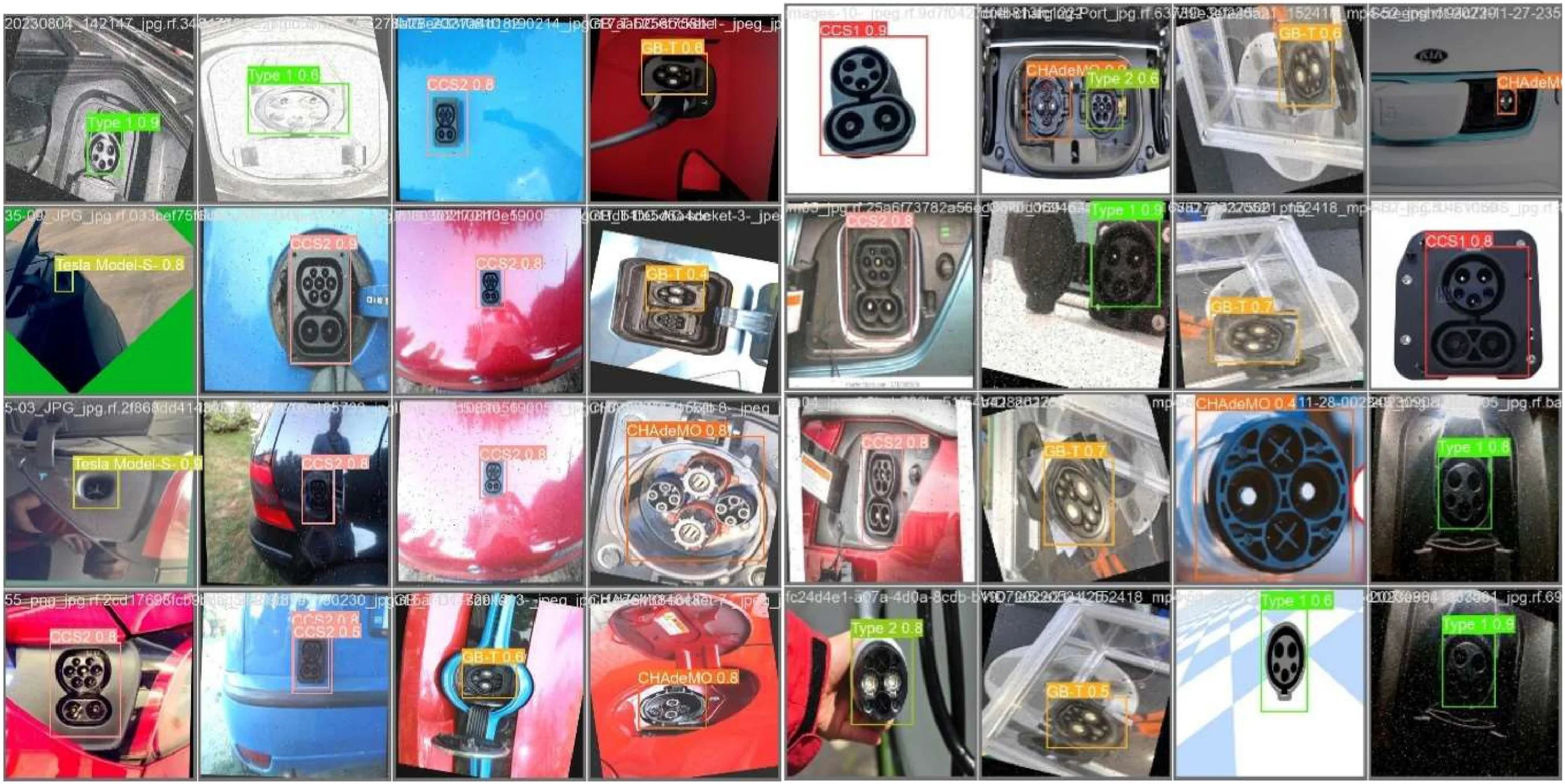
The YOLOv8 model detecting charging ports across seven connector standards

The 6-DOF arm I designed in SolidWorks, with a 750 mm horizontal and 1350 mm vertical reach.
System Overview
Manual EV charging is awkward or inaccessible in tight parking and for users with limited mobility. An autonomous arm has to find the charging port and align to it across different vehicle geometries and connector standards. The project paired a custom 6-DOF arm with vision-based port detection, validated in simulation. My scope was the arm design, the FEA and torque analysis behind it, and the port-detection model. Motion planning and control were handled by teammates in ROS 2 and MoveIt.
Key Technical Decisions
Learning-based detection over fixed geometric assumptions. Ports differ by standard, so a trained YOLO detector generalizes across connector types where a hand-tuned geometric matcher would need re-tuning for each one.
Comparative material FEA over choosing a material up front. Running both structural steel and aluminum through structural and modal analysis let the deformation and stress data per link drive the choice, rather than defaulting to one.
Learnings & Limitations
Docking was validated in simulation, not on hardware in the field. Real-world insertion would need force sensing or compliance control, which the paper notes as future work.
Vision-only detection is sensitive to lighting and partial occlusion around ports.
Detection strength varies by class. The model is strongest on Type-1, CCS1, and Tesla and weaker on some others like CHAdeMO.


Per-link deformation and stress from ANSYS FEA
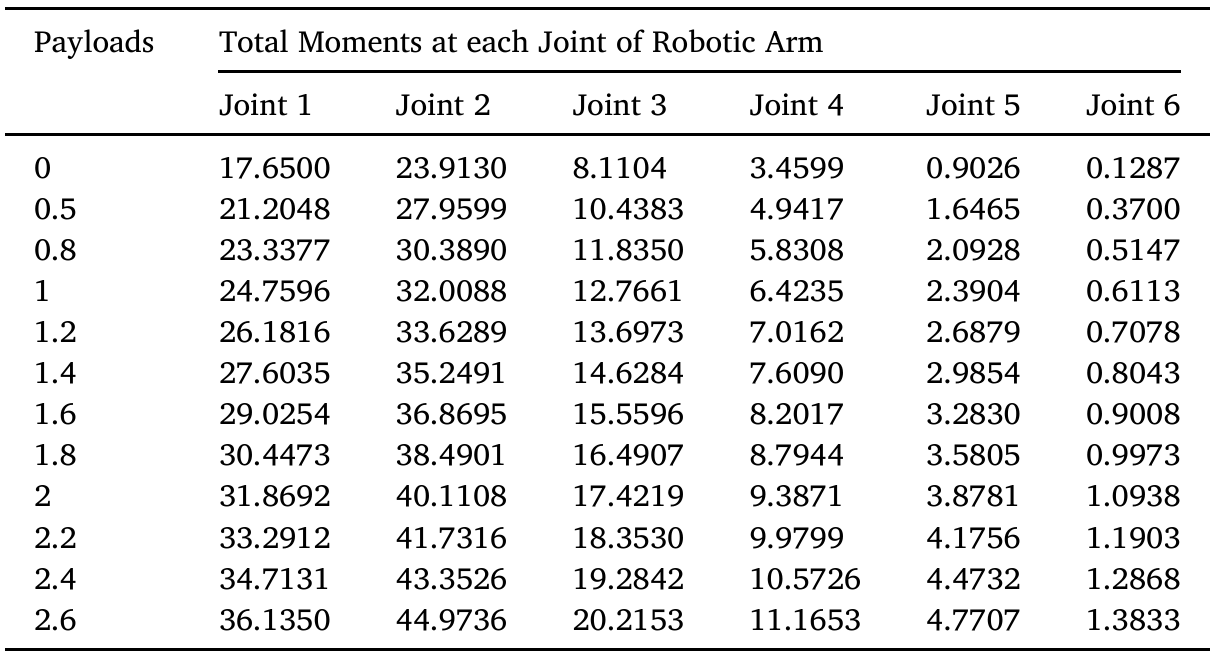
Joint torque across payloads up to 2.6 kg, used to size each joint's motor. The base joint sees the peak load at about 45 N·m.